Thermal Management and calculation
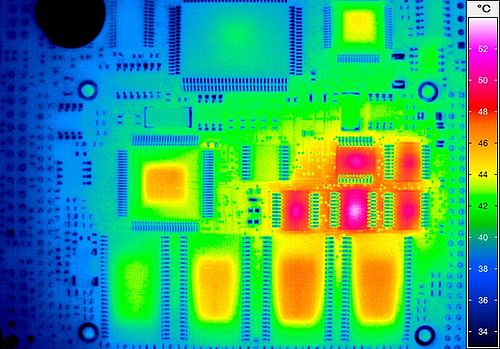
What is Thermal management and calculation and Why we are doing it?
In Electronics , thermal management means analysing how much heat each component generates and how that heat will be dissipated through the PCB and surrounding environment and how we can efficiently dissipate the heat through using air, Heat sinks and other cooling mechanism. It helps ensure the board does not overheat and that each component stays within its safe operating temperature.
So product in Automotive or aero space have some criteria to pass the test in different environment test like Rapid Change of Temperature (IEC 60068-2-14) 10.2, High Temperature Operation (ISO 16750-1), Composite Temperature/Humidity Cyclic Test(IEC 60068-2-38), Dewing Test (IEC 60068-2-30)..etc Which will basically mimic and push the limits of the product.
to pass all these defined tests by the customer we need to design the circuits according to the specification and tests provided by the customer, for that we need to do the thermal calculation for the power dissipating components and critical components specifically for Power supply like LDO or Switching converter, MOSFET (Switching circuit), ICs(Processor,amplifier..etc)
Here we are looking into following points below
- What is heat and how it is dissipated
- How to identify the components which we need to take care
- How to calculate the component temperature in the given ambient temperature
- How to calculate heat sink and the temperature difference
- How to select heat sink
- How to improve thermal dissipation in the layout
how it helps in our post design
What is heat and how it is dissipated
“Heat” is the transfer of energy from a warmer object to cooler one, But in electronics it is the wasted energy.
There are three ways to transfer heat, conduction, convection, and radiation. The method of designing the path for heat transferring and change of behaviors of the electronic system are cores of thermal management design.
Think of it as electrical friction. As electrons push through components like processors or wires, they collide with atoms, causing them to vibrate. Those vibrations are what we perceive as heat.
Resistance: Every component has some level of resistance. According to Joule’s Law, the power lost as heat is equal to the current squared times the resistance \(I^2*R\)
Efficiency: Heat is energy that didn’t go toward doing “work” (like loading a webpage or spinning a motor). High heat usually means low efficiency.
The Danger: If a device gets too hot, it can lead to thermal runaway, where the heat causes more current to flow, creating even more heat until the part melts or fails.
Management: This is why we use heat sinks, thermal paste, and fans—to pull that vibrating energy away from sensitive silicon chips and into the air.
How to identify the components which we need to take care
When we design a circuit we need to to do a power budgeting calculation of the circuit, by doing this we will get an understand of how the power requirement of each component and how load (Watts) in the each component/module with this we can easily calculate the temperature of each component. In future I’ll make post on how to make a power budgeting in excel.
Basically if we are designing a circuit for example an LED Driver circuit the power dissipated in the LED Driver IC/MOSFET so we can calculate thermal calculation for the particular device or Consider it’s noraml circuit then we can calculatr the power budget for Class A components like MCU,ICs,LDO,Transistors..etc
How to calculate the component temperature in the given ambient temperature
How to calculate heat sink and the temperature difference
How to select heat sink
How to improve thermal dissipation in the layout
Reference
- https://www.youtube.com/watch?v=GGgTmglWg3g
- https://www.onelectrontech.com/how-to-calculate-heatsink-thermal-management-power-dissipation/
- https://www.powerelectronictips.com/thermal-management-considerations-board-mounted-dc-dc-converters-faq/
- https://www.flowcad.com/en/thermal-basics.htm
- https://learn.sparkfun.com/tutorials/understanding-thermal-resistance/all
- https://www.mdpi.com/2079-9292/13/17/3544
- https://www.analog.com/en/resources/design-notes/package-thermal-analysis-calculator-tutorial.html